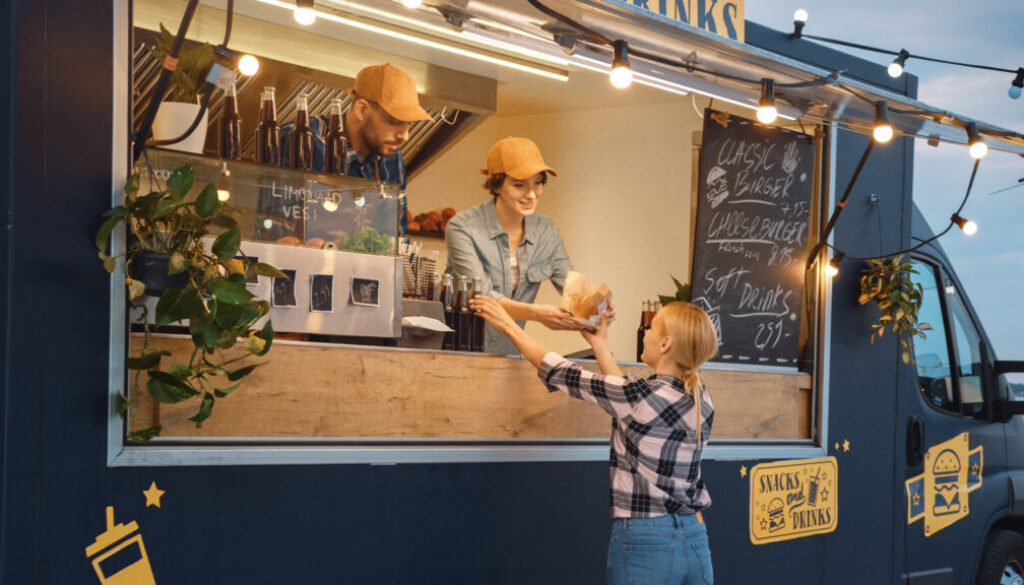
Adding a Food Truck to Your Restaurant? Here’s What Happens to Your Insurance
It’s a trend that’s been building for years and shows no sign of slowing down. Established brick-and-mortar businesses (restaurants, bakeries, specialty food shops, even retail brands) are launching food trucks and mobile units as a way to expand their reach, test new markets, and generate revenue outside their four walls.
It makes great business sense. From an insurance standpoint, it’s a minefield, and most business owners don’t realize it until something goes wrong.
A Food Truck Is Two Businesses in One
A food truck is, essentially, a commercial vehicle that drives on public roads, and it’s a cramped commercial kitchen serving the public off the back of it.
A standard commercial property or BOP policy is built around a fixed location. It covers the building, the equipment inside it, the liability that occurs on those premises. When your client drives their brand down the street in a truck, parks at a festival, and starts serving the public, they’ve stepped entirely outside the boundaries of what that policy was designed to cover.
The existing policy almost certainly doesn’t follow them.
What the Brick-and-Mortar Policy Misses
When a business owner launches a food truck as an extension of their existing operation, here’s what their current coverage typically leaves exposed:
Commercial auto liability
A food truck operation needs to purchase a commercial auto insurance policy before serving any food. A vehicle accident in a food truck is unlikely to be covered by a personal vehicle insurance policy. The commercial auto policy covers liability for bodily injury and property damage the truck causes, physical damage to the truck itself, and medical payments.
Property coverage for the truck and its contents
The brick-and-mortar property policy covers equipment at the fixed location. It doesn’t cover the truck, the cooking equipment installed in it, the generator, the inventory onboard, or the point-of-sale system. Items not permanently attached to the truck (generators, food stock, and utensils) are not covered by auto policies either, which means they need to be specifically addressed in a separate BOP tailored to the mobile operation.
General liability while operating at events and markets
The existing GL policy covers the premises. When the truck is parked at a farmers market, a festival, or a private event, the liability exposure shifts to that location, and the existing policy may not extend there. One insurance topic many new food truck owners are unfamiliar with is the need for additional insured certificates, which event organizers and venue operators routinely require before a truck can operate on their property.
Products and completed operations coverage
For a food truck, the piece of general liability that matters most is products and completed operations coverage, which is where a foodborne illness claim lands. If a customer gets sick from food served out of the truck, that claim needs to be covered and a policy that was written around a fixed restaurant location may not respond the way the client expects.
Business interruption
If the truck breaks down, gets damaged, or is taken out of service by a covered loss, the client loses revenue from that operation. A standard brick-and-mortar business interruption policy won’t cover income the truck would have generated. A business income coverage add-on specifically replaces the company’s business income while the truck is out of commission, but it has to be written for the mobile operation, not assumed to carry over from the existing policy.
The Carrier and Policy Structure Question
One of the complications brokers will encounter is that not every carrier that writes the brick-and-mortar account will also write the food truck, and bundling them isn’t always straightforward. Food truck owners are often left to work with a complex mixture of separate policies, including commercial auto, business owner, and restaurant policies provided by different insurers.
Some carriers have developed dedicated food truck programs that combine BOP and commercial auto coverage into a single package. Others will write them separately. The key for brokers is understanding that the existing carrier relationship and policy structure may need to be restructured when a client goes mobile.
It’s also worth noting that coverage eligibility can come with operational requirements. Some carriers require that a standalone food truck be in operation for a minimum number of months per year to qualify for certain coverages. This is a detail that matters for clients launching a seasonal or part-time mobile operation.
The Conversation Brokers Should Be Having
Any commercial client in the food, beverage, or retail space who mentions a food truck, a pop-up, a mobile unit, or even a catering expansion is a client whose coverage needs to be reviewed immediately, before the truck hits the road.
The food truck trend isn’t slowing down, and neither is the coverage gap it creates. For brokers with commercial clients in food service, retail, or hospitality, it might be a good time to check in on any plans to launch a mobile operation, so you can get ahead with them on the coverage front.